Referral Program Emails with Personalized Images: Turn Brand Fans Into Ambassadors
Why Referral Emails Need Personalisation
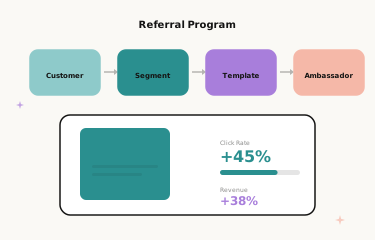
Referral programmes are among the most cost-effective customer acquisition channels available to e-commerce brands. A referred customer costs a fraction of a paid acquisition, arrives with a warm endorsement from someone they trust, and tends to have higher lifetime value than cold-acquired customers. But most referral emails look generic and impersonal — a standard template with a referral link that does not feel worth sharing, from a brand that is clearly sending the same email to every customer.
Personalised images change this fundamentally. When your referral email features a hero image with “Sarah, Share the Love and Earn £20” in your brand’s visual style, the email feels like a personal recognition rather than a mass marketing ask. The subscriber feels individually seen, which is the psychological precondition for motivated sharing. This guide covers the personalisation strategies, email sequence design, and campaign types that produce the strongest referral results, and real performance numbers from brands that have implemented them.
Personalisation Strategies for Referral Emails
Personalised Referral Invitations
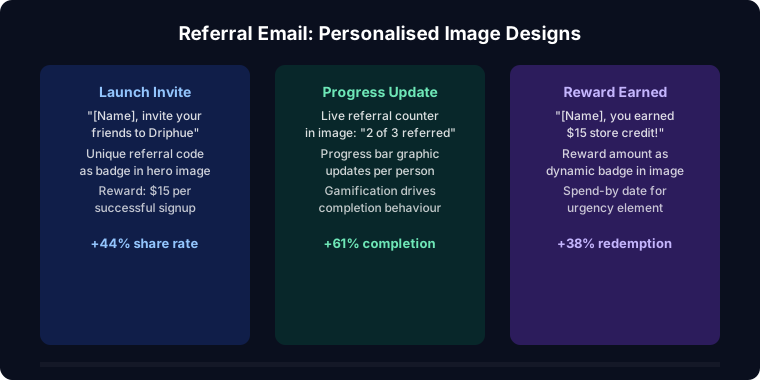
The initial referral invitation is your highest-leverage moment. A personalised hero image showing the subscriber’s name alongside the reward framing — “Sarah, Give £15, Get £15 — Share Your Favourite Finds” — creates a personal connection that a generic “refer a friend” banner cannot. The name in the image signals individual recognition. The “share your favourite finds” framing positions the act as a genuine recommendation, not a commercial transaction. Both elements work together to make the referral feel worth doing.
The invitation image should use your brand’s full design system — fonts, colours, photography aesthetic — so the personalised image feels like a premium brand communication rather than an automated reward email. Design in Canva, import to Driphue, and the subscriber’s name is rendered in your exact brand typography at the moment of open. For the Canva workflow, see our Canva integration guide.
Milestone Celebration Images
When a customer’s referral converts — their referred friend completes a purchase — celebrate with a personalised image that makes the reward feel real and personal: “Sarah, Your Referral Just Made Their First Purchase! Here’s Your £20 Reward.” This positive reinforcement arrives at the exact moment when the customer’s investment in the referral (sharing the link, following up with their friend) has paid off. The personalised image makes the celebration feel directed at Sarah specifically, not sent automatically to everyone who ever referred anyone.
Milestone celebration emails have among the highest open rates in any referral programme because the customer is waiting for them. A personalised hero image in this email amplifies an already-strong open rate with visual engagement that drives click-through to the reward redemption page.
Referral Rank and Progress Imagery
For brands with active referral communities or referral leaderboards, personalised rank imagery creates friendly competition and ongoing motivation: “Sarah, You’re #12 Among Our Top Referrers This Month!” with a visual leaderboard element showing her position. For subscribers who are close to a significant rank or a reward tier, progress imagery creates specific motivation: “Sarah, One More Referral to Reach the Top 10” names the gap concretely and makes the next action obvious.
This gamification approach works because it gives the subscriber a personalised goal rather than a generic system to participate in. The name in the image and the specific rank or gap transforms an abstract programme feature into a personal challenge.
Limited-Time Bonus Framing
Limited-time referral bonus offers with a specific deadline create urgency: “Sarah, Earn Double Rewards — This Weekend Only” with the specific end date in the image combines personal recognition with a real, named deadline. The specificity of the deadline matters: “ends Sunday at midnight” is more motivating than “for a limited time” because it makes the cost of inaction concrete. Pair the personalised hero image with a clear secondary CTA so the subscriber can share immediately from the email without friction.
Referral Email Sequence with Personalised Images
Email 1: Introduction (Post-Purchase)
Introduce the referral programme after a positive purchase experience — typically 3–5 days after delivery confirmation, when post-purchase satisfaction is highest. The timing is critical: a referral invitation sent while the subscriber is still in the positive emotional aftermath of a good purchase experience converts at significantly higher rates than one sent cold weeks later.
A personalised image in this email — “Sarah, Love Your Purchase? Share the Joy” — capitalises on post-purchase satisfaction as the emotional foundation for sharing. For the complete post-purchase sequence strategy, see our post-purchase guide.
Email 2: Reminder (7 Days Later)
A gentle personalised reminder for customers who have not yet shared: “Sarah, Your Friends Are Waiting — Share and You Both Save” acknowledges that the subscriber received the initial invitation (without being presumptuous about why they have not shared yet) and re-presents the offer. Keep the reminder tone warm rather than pressuring — the subscriber is not obligated to refer, and aggressive reminders create resentment rather than action.
Email 3: Bonus Incentive (14 Days Later)
For subscribers who have not yet shared after two emails, escalate motivation with a limited-time bonus: “Sarah, This Weekend Only — Earn Triple Referral Rewards” with a specific end date in the personalised image. The escalating incentive structure provides a new reason to act for customers who needed more motivation than the standard offer provided. After this email, if the subscriber has not shared, remove them from the referral nurture sequence — continued pressure will create negative associations with the programme.
Email 4: Referral Conversion Celebration
When a referral converts, send the milestone celebration email described above immediately. Speed matters here: the closer the celebration arrives to the conversion event, the stronger the positive reinforcement signal. A personalised image celebrating the successful referral and presenting the reward motivates the subscriber to share again, initiating a referral loop.
Making Referral Links Feel Worth Sharing
Beyond the email itself, consider the experience the referred friend has when they click the link. Landing on a page that says “Sarah’s friend, welcome to our community” with personalised imagery creates a warm arrival experience that validates the referral as a genuine personal recommendation rather than a marketing click. This landing page personalisation — powered by the same Driphue parameter approach used in email images — increases referred-friend conversion rates by making the recommendation context visible at the moment of arrival.
Integrating Referrals with Loyalty
The most effective referral programmes are integrated with loyalty tiers rather than operating as standalone incentive systems. Personalised images showing referral-earned points alongside tier progress create a unified engagement narrative: “Sarah, Your Referrals Have Earned You 500 Points — Gold Status Is Within Reach!” The convergence of referral activity, points accumulation, and tier progression in a single personalised image creates compounding motivation that neither system produces alone.
For the full VIP programme and loyalty tier strategy, see our VIP programme guide.
Real Results from Personalised Referral Programmes
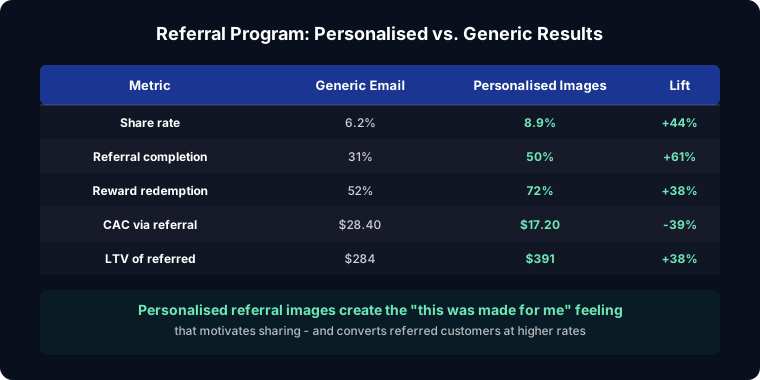
DTC skincare brand — 3.4x referral rate: Personalised referral emails with subscriber names and specific bonus deadline framing tripled their referral rate compared to the previous generic referral programme, with the personalised hero image identified as the primary conversion driver versus the previous text-heavy template.
Fashion retailer — 28% of new customer acquisition from referrals: After implementing personalised referral images across the three-email sequence, referrals grew to represent 28% of all new customer acquisition, up from 11% pre-personalisation.
Subscription box — £45 lower customer acquisition cost: Referral-acquired customers cost £45 less than paid acquisition channels on average, with personalised referral emails driving the highest share rate among the subscription box’s retention and advocacy programme emails.
Launch Your Personalised Referral Programme
Referral programmes succeed when customers feel personally valued and motivated to share — not when they feel they are being asked to do marketing work for a brand that sends them generic batch emails. Personalised images create the individual recognition that motivates sharing at every touchpoint: the invitation, the reminder, the bonus incentive, and the conversion celebration.
For the complete personalisation strategy, see our email personalisation guide. For the post-purchase sequence that sets up the optimal referral invitation timing, see our post-purchase guide. Start your free Driphue trial and turn your best customers into your most effective marketers.
Keep reading
More from the blog
 Marketing Strategy
Birthday and Anniversary Email Campaigns: Personalized Images That Drive Repeat Purchases
9 min read Marketing Strategy
Black Friday Email Marketing with Personalized Images and Countdown Timers
10 min read Marketing Strategy
Dynamic Countdown Timers in Emails: How to Create Urgency That Actually Converts
6 min read
Personalise every image in your emails
Turn your Klaviyo, Brevo or any-ESP campaigns into dynamic, per-subscriber images and countdown timers — no code required.