Email Personalization Strategies That Drive 3x Higher Engagement for Small E-Commerce Brands
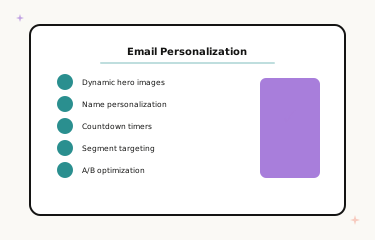

Beyond {First_Name}: The Evolution of Email Personalisation
In 2026, the average consumer receives over 120 emails per day. Generic broadcast campaigns are losing effectiveness at every metric: lower open rates, lower click-through rates, and lower conversion rates as subscribers learn to filter promotional noise. Personalised emails deliver 2.5x higher click-through rates and are 6x more likely to drive a conversion than equivalent non-personalised campaigns. Yet the majority of e-commerce brands still send primarily one-size-fits-all campaigns.
True personalisation means creating experiences that feel custom-built for each recipient — dynamic product recommendations, personalised images with subscriber names, behavioural triggers responding to specific actions, real-time content reflecting current inventory or offers, and deadline-based urgency tied to genuine sale events. This guide covers five core personalisation strategies, how to implement each, and the expected impact for e-commerce brands at various stages of maturity. For the complete technical overview, see our complete guide to email image personalisation for e-commerce.
Strategy 1: Visual Personalisation with Dynamic Image Overlays
Email images are processed 60,000 times faster than text. Making the hero image personalised transforms the entire email experience — the subscriber’s name in the most visually prominent element of the email creates an immediate signal of personal relevance before a single word of copy is read.
How it works: Create branded email image templates in Canva with text overlay zones for the subscriber’s name, location, loyalty tier, or any other personalised data point. Import via Driphue’s Canva integration, configure the dynamic parameter, and append your ESP’s merge tag to the Driphue image URL. Every subscriber sees their name rendered into the image at open time. No code required.
Best use cases: Welcome emails with the subscriber’s name in the hero image, birthday and anniversary campaigns with celebratory personalised imagery, location-based promotions featuring local relevance, and VIP recognition imagery for your highest-value customers.
Expected impact: 35–50% higher click-through rates on personalised hero CTAs compared to equivalent static image campaigns. For Klaviyo users, see our Klaviyo integration guide for step-by-step setup.
Strategy 2: Deadline-Based Urgency in Personalised Images
Deadline urgency — a specific, named end time for a sale, offer, or shipping window — is one of the highest-converting elements in e-commerce email. When deadline messaging is personalised (“Sarah, your exclusive offer ends Friday” rather than “offer ends Friday”), the combination of personal address and genuine time pressure drives significantly higher action rates than either element alone.
How it works: Design personalised image templates that prominently feature the subscriber’s name and the specific sale deadline — a date, a day name, or a precise time. The deadline must be real and specific to create credible urgency. Vague urgency (“hurry”, “limited time”) has limited effect; a named deadline (“ends midnight Sunday”) creates a concrete decision point.
Best use cases: Flash sale launch and last-chance emails, shipping deadline reminders during gifting seasons (Valentine’s Day, Mother’s Day, Black Friday), cart abandonment with sale-end framing, and promotional campaign close emails.
Expected impact: 25–40% higher conversion rates on time-sensitive offers when deadline urgency is personalised in the hero image. For the full flash sale strategy, see our guide to flash sale email campaigns.
Strategy 3: Behavioural Segmentation with Personalised Product Images
Generic product recommendations — “top sellers” or “you might also like” — perform significantly below recommendations driven by actual subscriber behaviour. When a subscriber has browsed a specific category, purchased in a product line, or engaged with particular content, personalised product imagery based on that behaviour produces dramatically higher click-through rates.
How it works: Segment your list by purchase history, browsing behaviour, or engagement patterns using your ESP’s segmentation tools. Create personalised product imagery templates for each major category segment. Route each subscriber to their relevant template based on behavioural data. The name personalisation applies across all segments; the product imagery changes based on segment.
Best use cases: Post-purchase cross-sell emails featuring category-adjacent products, replenishment reminders for consumable products, “new arrivals in your category” campaigns, and win-back emails featuring the product category of the subscriber’s last purchase.
Expected impact: 3–5x higher click-through rates on personalised product imagery compared to generic bestseller blocks. For the full strategy, see our guide to purchase history email personalisation and our email segmentation guide.
Strategy 4: Real-Time Dynamic Content
Static email content that is accurate at send time can become inaccurate or irrelevant by the time the subscriber opens it — a product may have sold out, a price may have changed, a promotion may have ended. Real-time personalisation ensures email content is always current at the moment of open, not the moment of send.
How it works: Connect live data sources to personalised image templates. When a subscriber opens the email, Driphue pulls current data and generates an updated image reflecting the live state of that data. The subscriber sees accurate, current information regardless of when they open.
Best use cases: Low stock alerts (“only 3 left in your size”), current pricing in promotional imagery, real-time social proof counts showing recent purchase activity, and live shipping estimates. For the full social proof strategy, see our guide to real-time social proof in email.
Expected impact: 15–30% conversion rate increase attributed to reduced purchase hesitation when subscribers see accurate, real-time inventory and pricing information rather than potentially outdated static content.
Strategy 5: Lifecycle Personalisation
Some of the highest-converting personalisation happens around subscriber milestones and relationship moments. These are campaigns that occur at predictable, individually relevant times — birthdays, purchase anniversaries, loyalty tier achievements, and win-back moments after periods of inactivity.
How it works: Set up triggered email automations that fire based on subscriber-specific dates or behavioural milestones. Each trigger fires a personalised image email tailored to that specific moment: a birthday congratulation, an anniversary thank-you, a tier upgrade celebration, a win-back after 90 days of inactivity. The timing is what makes these emails feel genuinely personal rather than promotional.
Best use cases: Birthday and anniversary campaigns with celebratory personalised imagery, loyalty tier achievement notifications, post-purchase review requests at the optimal time post-delivery, and win-back campaigns for lapsed subscribers with personalised “we miss you” imagery.
Expected impact: Birthday and anniversary emails with personalised images generate 45% open rates and drive 3x higher repeat purchase rates than standard promotional campaigns. The emotional connection of a milestone moment combined with a personalised visual experience makes these campaigns disproportionately effective relative to their setup cost.
Putting Strategies Into Practice: Recommended Implementation Order
The optimal implementation order for e-commerce brands is determined by impact-to-effort ratio. Start with the highest-impact, highest-frequency email flows where personalised images will generate the most impressions and measurable revenue before moving to lower-frequency campaigns.
A personalised welcome email series is the highest-leverage starting point — four times the open rate of standard campaigns, first impressions at the most engaged moment in the subscriber relationship, and the window to convert signup intent into first purchase. Next, cart abandonment with personalised images recovers revenue that would otherwise be permanently lost. Once those flows are running, add personalised promotional campaigns. Brands that implement personalisation systematically across these three areas consistently see email revenue lifts of 40% or more.
A concern many brands raise when implementing personalised images is the potential impact on deliverability. The effect is positive: personalised images improve deliverability through higher engagement signals, as described in our email deliverability guide.
Measuring What Works
Personalisation without measurement is strategy without accountability. Use systematic A/B testing to establish clear before-and-after baselines for each personalised campaign you launch. Track click-through rate, conversion rate, and email-attributed revenue as primary metrics. For the complete measurement framework, see our email personalisation ROI guide.
Start Personalising Today
Email remains the highest-ROI marketing channel for e-commerce, but generic approaches are losing effectiveness as inbox competition intensifies. Driphue makes sophisticated personalisation accessible through a no-code workflow, universal ESP compatibility via Canva import, and transparent view-based pricing. Follow our 90-day implementation roadmap for a structured path from zero personalisation to a fully optimised programme — and start your free Driphue trial to launch your first personalised campaign today.
Keep reading
More from the blog
 Email Personalization
The E-commerce Guide to Email Image Personalisation: From First Image to Full Automation
11 min read Email Personalization
Email Image Personalisation Tools Compared: Driphue vs NiftyImages vs Hyperise vs OKZest
10 min read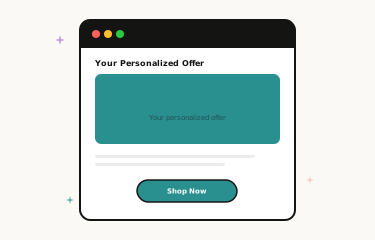 Email Personalization
Email Image Personalization: The Complete Guide for E-Commerce Brands in 2026
8 min read
Personalise every image in your emails
Turn your Klaviyo, Brevo or any-ESP campaigns into dynamic, per-subscriber images and countdown timers — no code required.