Email Personalization for Fitness and Activewear Brands: Motivating Images That Convert

Why Fitness Brands Need Personalised Email Images
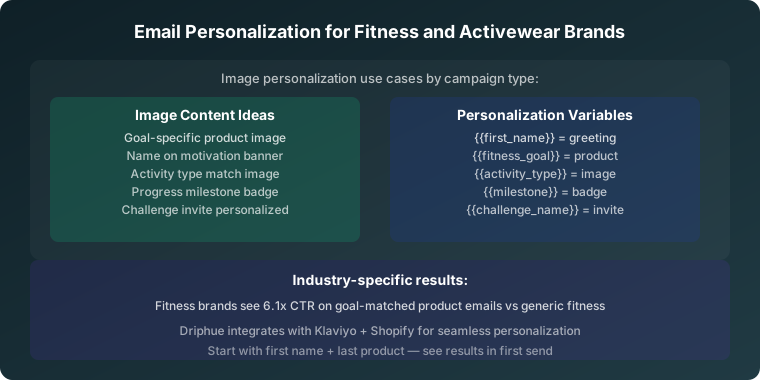
Fitness and activewear purchasing is driven by motivation, identity, and personal aspiration. Your customers don’t just buy workout clothes — they invest in the version of themselves they’re working to become. Generic email marketing misses this deeply personal dimension entirely. A promotional banner for a fitness brand that doesn’t acknowledge the subscriber’s goals or activity is just another retailer email in a crowded inbox.
Dynamic image personalisation changes this. When a subscriber sees “Sarah, crush your goals this week” in an energising, on-brand personalised image, it creates a motivational touchpoint that positions your brand as a partner in their fitness journey — not just another retailer. This guide covers the personalisation strategies that work best for fitness and activewear brands, the campaign types that drive the most engagement, a complete Driphue setup guide, and real results from fitness brands that have implemented personalised image programmes.
Personalisation Strategies for Fitness and Activewear Brands
Goal-Based Personalisation
Fitness customers have specific, personally meaningful objectives: running a marathon, building strength, starting yoga, training for a sport, getting back into shape. Brands that collect goal data through onboarding quizzes, account profiles, or product category purchase inference can personalise imagery to reflect each subscriber’s specific fitness goal.
“Sarah, your running season starts now” for runners versus “Sarah, new strength training gear” for lifters creates hyper-relevant visual experiences that generic fitness campaign imagery can’t replicate. This is the highest-impact personalisation type for fitness brands because it connects the brand directly to what the subscriber cares most about.
Activity and Sport-Based Imagery
Personalise images based on each subscriber’s primary sport or activity. A yoga practitioner sees calm, flow-oriented personalised imagery alongside your yoga collection. A CrossFit enthusiast sees high-intensity, functional fitness visuals alongside your performance gear. A runner sees run-focused imagery. A cyclist sees cycling-specific content.
The subscriber’s name rendered alongside activity-relevant imagery creates a level of visual relevance that no single generic “fitness” campaign image can achieve. For brands with broad product ranges, activity-based personalisation is the most efficient way to deliver relevant imagery at scale.
Motivational Campaign Personalisation
Fitness email marketing is uniquely suited to motivational personalisation — a category of messaging that has no parallel in most other e-commerce verticals. New Year campaigns featuring “Sarah, this is your year” imagery. Monday motivation emails with “Sarah, start your week strong.” Post-purchase encouragement images: “Sarah, your new gear is on its way — time to move.”
This emotional personalisation builds a relationship between the subscriber and the brand that transcends transactional email marketing. A fitness brand that regularly sends personalised motivational imagery becomes part of the subscriber’s fitness identity, not just a product supplier.
New Collection and Drop Announcements
Activewear brands frequently release new collections, limited editions, and colourways. A personalised new collection announcement — “Sarah, our new collection is live” — creates a sense of personal invitation to explore the new range. For limited edition drops, a personalised image that conveys exclusivity and scarcity — “Sarah, limited edition — while stocks last” — drives urgency without requiring a countdown mechanism.
For flash sale strategy, see our dedicated guide to flash sale emails with personalised images.
Loyalty and VIP Personalisation
Fitness and activewear brands with loyal repeat-purchase communities benefit significantly from loyalty tier personalisation. A VIP subscriber sees “Sarah, your exclusive VIP access” in a personalised image. A subscriber approaching VIP tier sees “Sarah, you’re almost VIP” with a progress-oriented personalised visual. For the full loyalty strategy, see our guide to loyalty programme email personalisation.
High-Impact Campaign Types for Fitness Brands

Welcome Series
Fitness brand welcome series should feel like joining a community of people who share the subscriber’s values, not just a retailer onboarding sequence. “Welcome to the team, Sarah” in energising brand imagery sets the tone for an active, motivational email relationship. If you collect goal data at sign-up, the welcome series is the first opportunity to demonstrate goal-aligned personalisation.
For the full welcome sequence strategy, see our guide to welcome email series personalisation.
Cart Abandonment Recovery
Fitness gear cart recovery benefits from motivational personalisation. “Sarah, don’t let these gains slip away” creates a fitness-relevant urgency that generic “you left something in your cart” emails cannot achieve. The personalised image connects the recovery message to the subscriber’s fitness aspirations, making the purchase feel like part of their journey rather than a transaction.
For the full cart recovery strategy, see our guide to cart abandonment emails with personalised images.
Seasonal Fitness Campaigns
Fitness email marketing is inherently seasonal. New Year resolution energy (January), spring fitness motivation (March–April), summer body preparation (May–June), autumn run season (September–October), and holiday gifting (November–December) each create distinct personalised campaign opportunities.
The seasonal rhythm of fitness also creates natural re-engagement moments. A subscriber who went quiet in winter can be re-engaged with a “Sarah, spring training starts now” personalised image in March. For seasonal strategy, see our guide to summer campaign personalisation and our holiday email guide.
Post-Purchase Community Building
After purchase, personalised post-purchase images invite customers into your brand community. “Sarah, show us how you move” — a personalised user-generated content prompt — encourages social sharing and community participation. “Sarah, what are you training for next?” personalised to their activity type builds ongoing engagement beyond the transactional purchase relationship.
For post-purchase sequence strategy, see our guide to post-purchase email personalisation.
Re-engagement Campaigns
Subscribers who haven’t opened or purchased in 60–90 days can be re-engaged with motivational personalised imagery. “Sarah, we miss you — time to get back to it” with a personalised, activity-specific image reconnects the subscriber to their fitness aspirations and to your brand simultaneously. For the full strategy, see our guide to re-engagement email personalisation.
How to Set Up Personalised Fitness Brand Images with Driphue
Step 1: Design in Canva
Create your fitness email images in Canva using your brand’s visual identity — your brand colours, typography, and the energetic or aspirational aesthetic that characterises your brand. For goal-based personalisation, create template variants per goal category (running, strength, yoga, cycling, etc.) with activity-relevant imagery in each. Each template should include a prominent first-name text layer.
Step 2: Import into Driphue
Import each Canva template via the Canva integration. Mark the name text layer as dynamic and assign the parameter name. For activity-based templates, create separate templates per activity and use your ESP’s segmentation logic to route each subscriber to the appropriate template URL.
Step 3: Connect Your ESP
Append your ESP’s first name merge tag to each Driphue URL. For Klaviyo: ?name={{ first_name }}. For the full ESP syntax guide, see our ESP personalisation guide. Embed the personalised URL in each campaign and automated flow in your ESP.
Step 4: Deploy and Measure
Deploy personalised images to your welcome series first, then to cart recovery, then to seasonal campaigns. Track CTR and conversion rate per flow against your pre-personalisation baseline to measure the impact.
Real Results from Fitness and Activewear Brands
Activewear DTC brand — 39% email revenue lift: Personalised motivational images across campaign and automated emails increased email-attributed revenue by 39% in the first three months. Goal-based personalisation in the welcome series produced the single largest individual lift.
Fitness equipment company — 3.3x cart recovery rate: Motivational personalised cart recovery images — with the shopper’s name and a fitness-specific recovery message — tripled their cart recovery rate compared to the previous generic cart reminder template.
Running shoe brand — 47% welcome conversion lift: Personalised welcome images with activity-specific imagery converted 47% more new subscribers into first-time buyers, with running-specific imagery for running segment subscribers outperforming the generic welcome across all metrics.
Start Personalising Your Fitness Brand Emails
Fitness brands have a unique personalisation advantage: customers are emotionally invested in their fitness identity. Personalised images connect your brand to that identity in every email, turning transactional product communications into motivational touchpoints that build genuine loyalty.
Start with goal-based or activity-based personalisation in your welcome series. Design in Canva, import to Driphue, connect your ESP, and deploy. For the complete strategy, see our complete guide to email image personalisation for e-commerce.
Keep reading
More from the blog
 Industry Trends
Email Personalization for Arts and Crafts Brands: Inspiring Makers One Inbox at a Time
9 min read Industry Trends
Email Personalization for Baby and Kids Brands: Growing Families, Growing Revenue
9 min read Industry Trends
Email Personalization for Education and Online Course Brands: Enrollment to Completion
9 min read
Personalise every image in your emails
Turn your Klaviyo, Brevo or any-ESP campaigns into dynamic, per-subscriber images and countdown timers — no code required.