Back-to-School Email Campaigns with Personalized Images: Capture the Shopping Season

Why Back-to-School Emails Need Personalisation
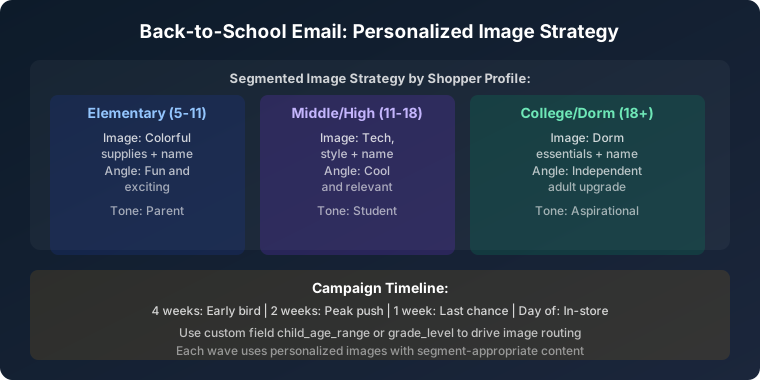
Back-to-school is the second-largest retail spending event of the year, trailing only the holiday season. Parents, students, and educators are shopping across multiple categories simultaneously — apparel, electronics, school supplies, dorm essentials, and more. In total, back-to-school spending represents tens of billions of dollars each year, and email remains one of the highest-ROI channels for capturing that spend.
The back-to-school audience is uniquely diverse: elementary school parents, high school students, college freshmen, postgraduate students, and teachers all have fundamentally different needs, budgets, and purchase timelines. Personalised images let you address each segment with relevant messaging — "Sarah, everything your family needs for school" versus "Sarah, dorm room essentials you’ll love" — creating individual relevance at scale. This guide covers the full back-to-school email sequence, segmentation strategy, cart recovery, cross-category opportunities, and real results from personalised back-to-school campaigns.
The Back-to-School Email Sequence
A high-performing back-to-school programme spans six to eight weeks, beginning in mid-July for most audiences and running through the first week of school. Each phase targets a different stage of purchase readiness, and personalised imagery aligned to each stage produces significantly higher conversions than a single broad campaign.
Phase 1: Early Bird Campaign (Six Weeks Before School)
Capture the organised planners who start shopping in July. "Sarah, get ahead of back-to-school" with personalised category suggestions based on past purchase behaviour gives early shoppers a reason to start now. Early campaigns face minimal inbox competition — most brands do not begin back-to-school messaging until late July — and capture the subscribers who will spend the most per transaction because they are shopping with a full, planned list rather than last-minute urgency.
Personalise this email by school level where data allows. A subscriber who has purchased children’s apparel sees family-focused back-to-school imagery. A subscriber who has purchased electronics sees student tech imagery. The segmentation does not need to be perfect at this stage — purchase history is a reliable proxy for school level intent.
Phase 2: Main Campaign Launch (Three to Four Weeks Before)
Launch the full back-to-school promotion at the peak of the shopping season. "Sarah, your back-to-school sale is live" with a personalised hero image and a specific sale end date creates both relevance and deadline urgency. This is the highest-traffic phase of the back-to-school season — the period when most families are actively making purchase decisions across all categories simultaneously.
Segment your template library for this send: family/elementary templates focused on school supplies and children’s apparel, high school templates featuring fashion and tech, college templates centred on dorm essentials and student electronics. Each segment receives the same name personalisation with category-relevant product imagery behind it.
Phase 3: Category-Specific Reminders (Two Weeks Before)
Send targeted reminder emails by product category based on what subscribers have browsed or purchased but not yet completed. "Sarah, don’t forget tech for school" or "Sarah, school wardrobe essentials" with different Driphue templates per category creates hyper-relevant mid-campaign touches that feel like curated recommendations rather than promotional blasts.
This phase is where behavioural data — browse history, cart additions, partial purchases — significantly amplifies personalisation effectiveness. A subscriber who browsed laptops but did not purchase receives a personalised laptop category image. A subscriber who purchased supplies but not clothing receives an apparel-focused personalised image.
Phase 4: Last-Minute Rush (One Week Before)
Capture procrastinators with personalised deadline urgency. "Sarah, school starts Monday — shop now" with a specific first-day-of-school date creates a genuinely personal, time-bound prompt. The last-minute rush phase often generates the highest daily revenue of the entire back-to-school season because procrastinators are highly motivated and have a real, non-negotiable deadline driving immediate action.
Pair the personalised image with expedited shipping messaging — "order by Thursday, delivered before Monday" — to convert subscribers who are worried about whether they can still receive items in time.
Phase 5: Forgot Something? (First Week of School)
A post-start follow-up catches the items parents and students inevitably forgot. "Sarah, missing anything? We’ve got you covered" with personalised product suggestions based on incomplete purchase patterns from the preceding weeks captures incremental revenue that a standard back-to-school sequence misses entirely. This email has virtually no inbox competition because most brands have already ended their back-to-school campaigns.
Segmentation by School Level
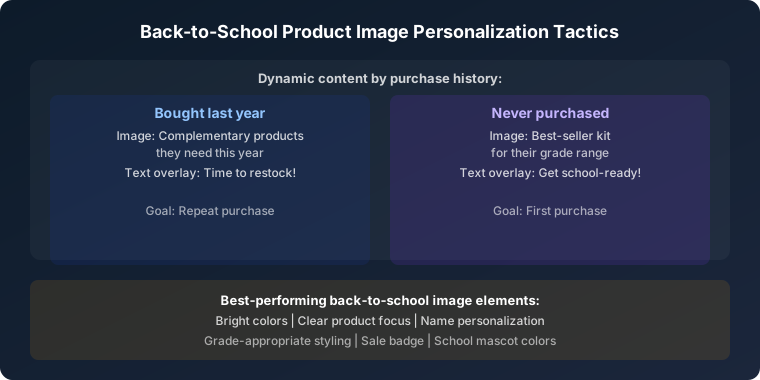
Back-to-school personalisation is most effective when segmented by education level, because the purchase categories, spend levels, and messaging tone differ significantly across segments. Elementary school parents are shopping for the family, focused on supplies and children’s clothing, and respond to family-oriented imagery. High school students are often making their own purchasing decisions, care deeply about brand identity and fashion, and respond to peer-relevant imagery. College freshmen are the highest-spend segment — setting up a completely new living space from scratch — and respond to dorm-room-focused, independence-oriented imagery.
Collect education level data through preference quizzes at signup, product category purchase signals, or explicit profile fields. Even a rough segmentation based on purchase history produces significantly better results than a single undifferentiated back-to-school campaign. For the full segmentation strategy, see our email segmentation guide.
Cart Recovery During Back-to-School
Back-to-school cart abandonment is high because parents and students are deliberately comparison-shopping across multiple retailers before committing. Personalised cart recovery images with the subscriber’s name and the specific school start date create time-based urgency that is both personal and genuinely consequential: "Sarah, school starts in 10 days — complete your list."
The school start date is the most powerful urgency anchor available during back-to-school season. Unlike a generic "sale ends Sunday" message, the school start date is a personal, non-negotiable deadline that the subscriber is already acutely aware of. Personalised cart recovery imagery that references this date consistently outperforms standard urgency messaging during back-to-school. For the full cart recovery strategy, see our guide to cart abandonment emails with personalised images.
Cross-Category Opportunities
Back-to-school is one of the few shopping seasons where multiple product categories experience simultaneous peak demand. Electronics brands promote laptops, tablets, calculators, and student tech bundles — for the full electronics strategy, see our electronics brand personalisation guide. Fashion brands showcase school wardrobes, uniform alternatives, and student style — see our fashion brand personalisation guide. Home brands feature dorm room essentials, bedding, and small appliances — see our home brand personalisation guide. Each category benefits from personalised back-to-school imagery that connects the product to the specific student life moment.
Setting Up Back-to-School Personalised Images with Driphue
Design your back-to-school template library in Canva with school-season visual identity — energetic, fresh, and category-specific. Create templates for each sequence phase and each school-level segment: family/elementary, high school, and college. Each template includes a prominent first-name layer and category-relevant product imagery. Import via Driphue’s Canva integration, configure the name parameter, and use your ESP’s segmentation logic to route each subscriber to the appropriate template. For Klaviyo syntax: ?name={{ first_name }}. For other ESPs, see our ESP personalisation guide.
Real Results from Back-to-School Personalisation
Multi-category retailer — 46% higher back-to-school revenue: Personalised back-to-school images segmented by school level across a five-phase sequence increased email-attributed back-to-school revenue by 46% versus the previous year’s undifferentiated campaign.
Electronics brand — 3.2x laptop bundle sales: Personalised student tech bundle images targeting college-bound subscribers tripled laptop bundle conversions from email campaigns, with the personalised "Sarah, your college tech list" imagery producing the highest conversion rate of any back-to-school email in their history.
Start Planning Your Back-to-School Campaigns
Back-to-school rewards brands that plan early and personalise by audience segment. Begin building your template library in June, set up your school-level segments in July, and launch your early bird campaign by mid-July before inbox competition intensifies.
For broader seasonal context, see our summer email marketing guide for the full warm-weather season strategy, and our holiday email guide for the Q4 pivot that follows. Start your free Driphue trial and capture this massive shopping season with personalised imagery that speaks directly to every subscriber.
Keep reading
More from the blog
 Marketing Strategy
Birthday and Anniversary Email Campaigns: Personalized Images That Drive Repeat Purchases
9 min read Marketing Strategy
Black Friday Email Marketing with Personalized Images and Countdown Timers
10 min read Marketing Strategy
Dynamic Countdown Timers in Emails: How to Create Urgency That Actually Converts
6 min read
Personalise every image in your emails
Turn your Klaviyo, Brevo or any-ESP campaigns into dynamic, per-subscriber images and countdown timers — no code required.